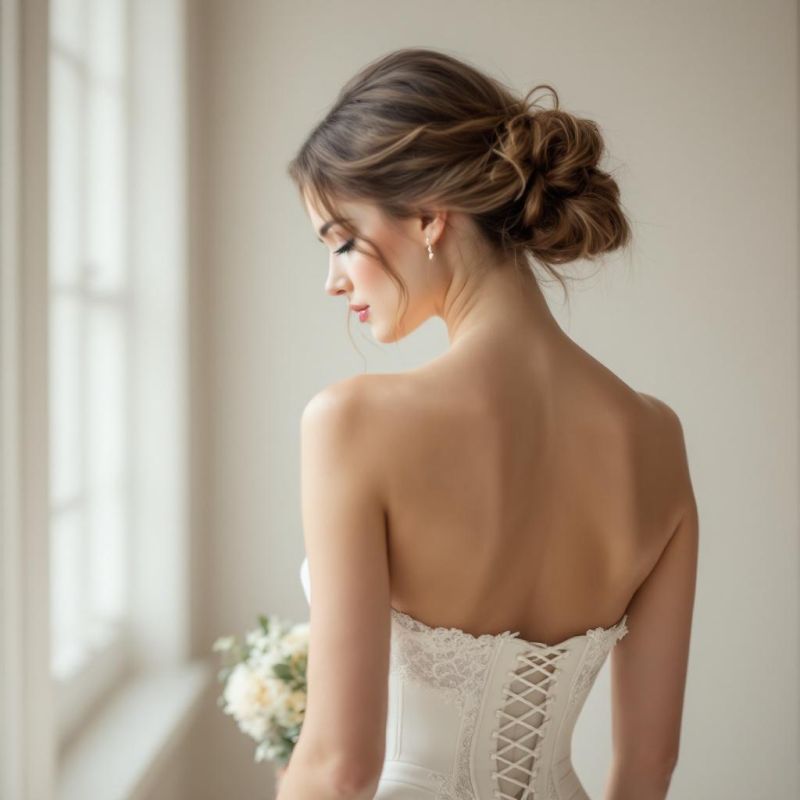
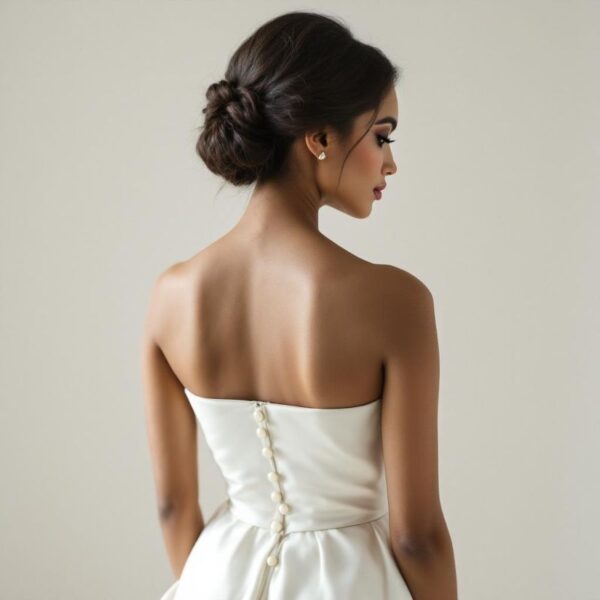
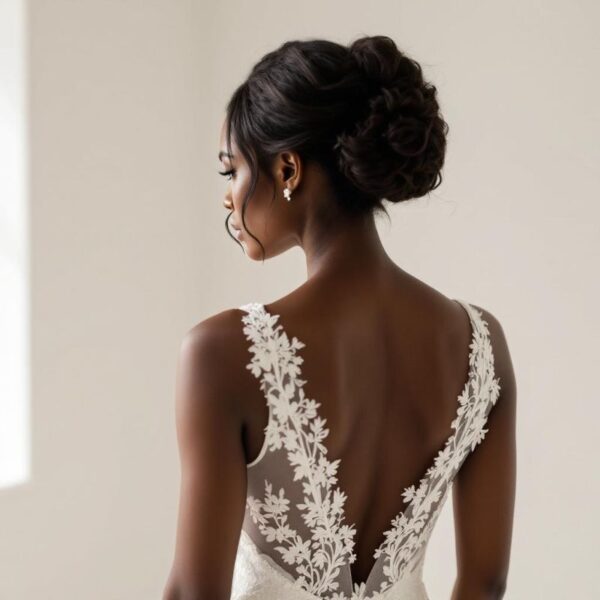
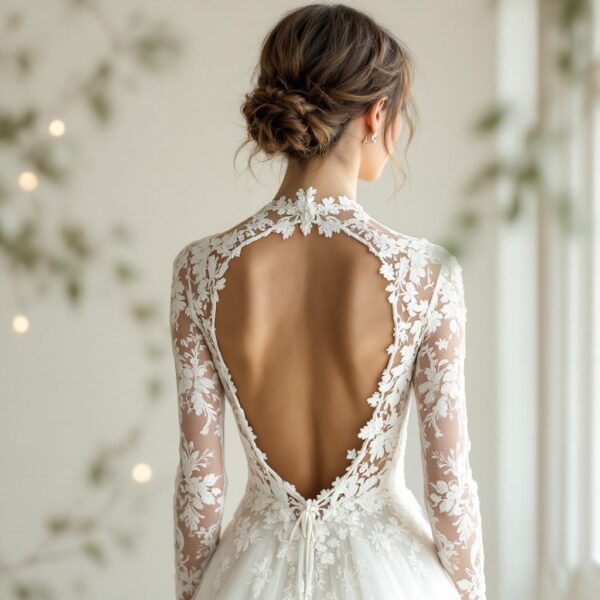
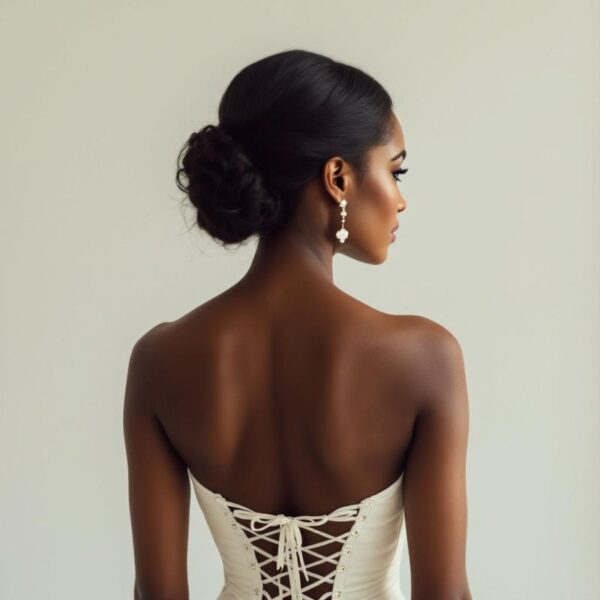
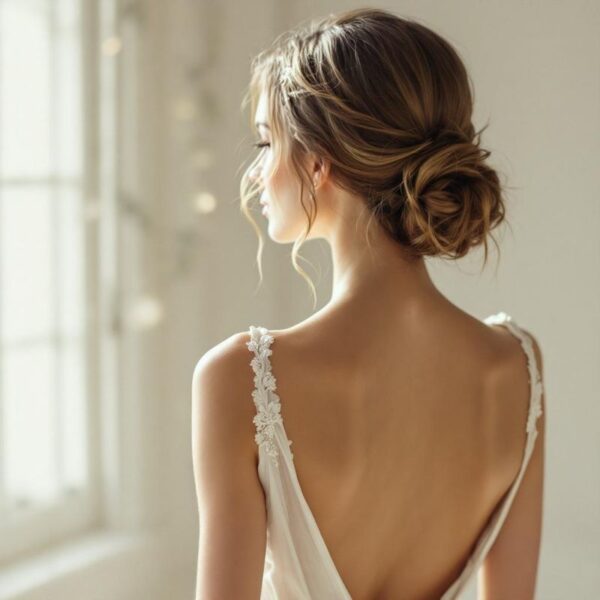
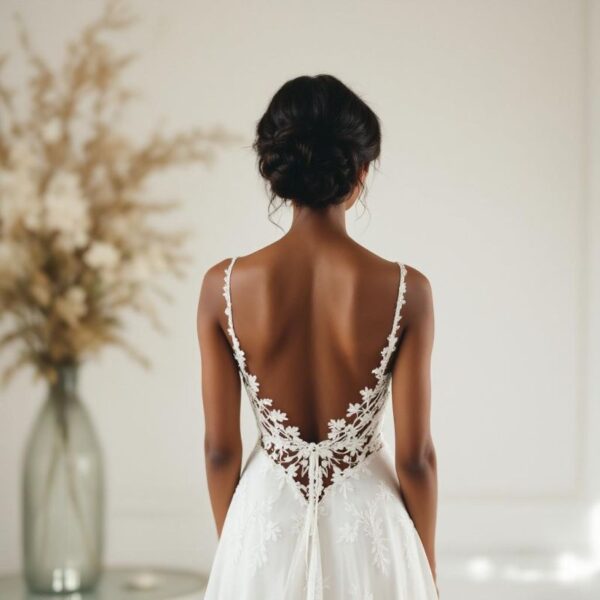
A corset bodice uses vertical strips of boning, usually steel or plastic, sewn into channels within the bodice fabric. These bones provide structure that holds the bodice in shape, prevents wrinkling, and distributes the weight of the skirt evenly. The boning also cinches the waist and lifts the bust, creating an hourglass silhouette. Some corset bodices are hidden beneath smooth outer fabric, while modern designs deliberately expose the boning as a visible design element. Either way, the construction provides a level of support and shaping that no other bodice style can match.
Most wedding dresses have some boning in the bodice for structure, but a true corset goes further. A boned bodice might have a few bones at the seams for light support. A corset has multiple bones placed closely together, sometimes with a rigid front busk closure, creating a garment that actively shapes the torso. The corset provides significantly more support and definition, which is why it's particularly popular with fuller-figured brides and anyone wanting a defined hourglass shape. The term "corset back" specifically usually refers to the lace-up closure at the back combined with this internal structure.
One of the strongest trends in modern bridal is visible corset boning. Rather than hiding the structure beneath a layer of fabric, the boning channels are left exposed or highlighted, creating a graphic, architectural detail on the bodice. This can be done through sheer fabric where the bones are visible, contrasting stitching that draws attention to the channels, or completely exposed construction. The exposed corset trend draws from high fashion and gives wedding dresses a contemporary, editorial quality that feels current and confident.


Monday: 10am - 5pm
Tuesday: By Appointment
Wed & Thurs: 10am - 5pm
Friday: 12pm - 6pm
Saturday: 10am - 5pm
Sunday: Closed