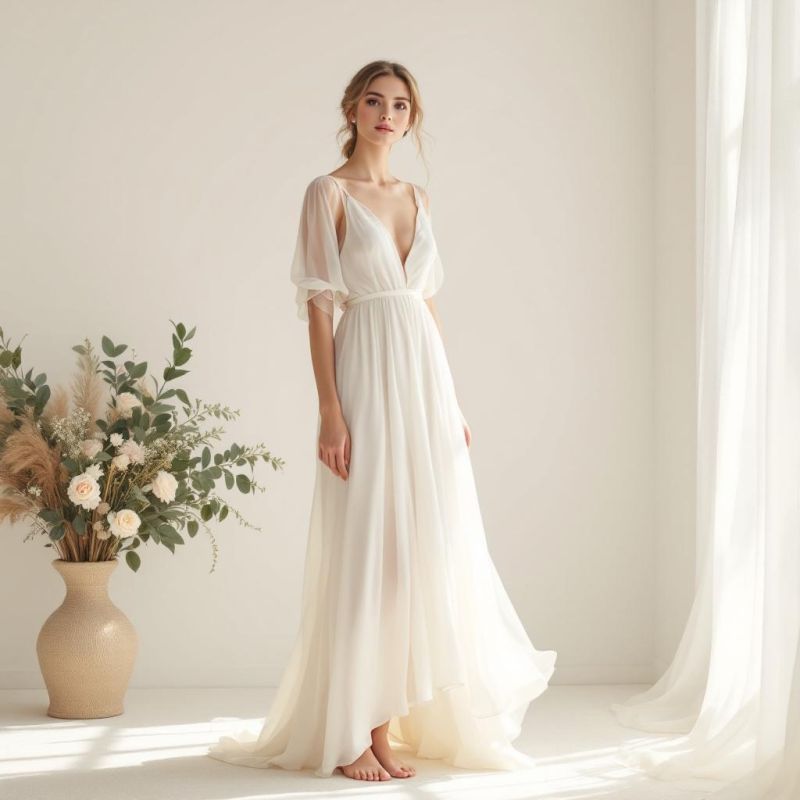
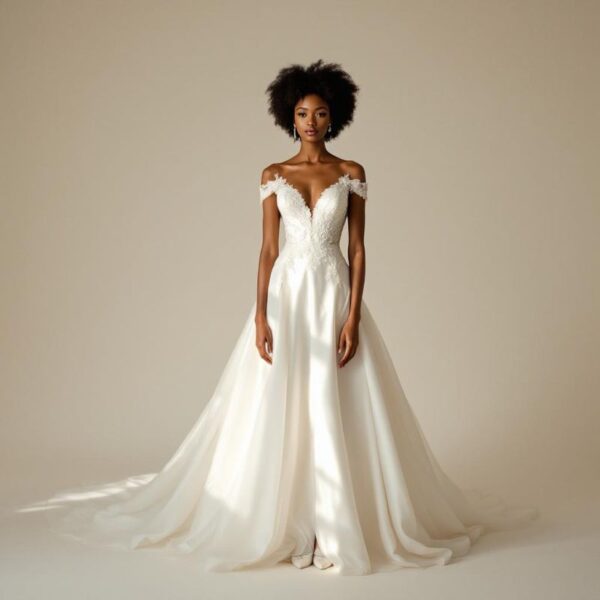
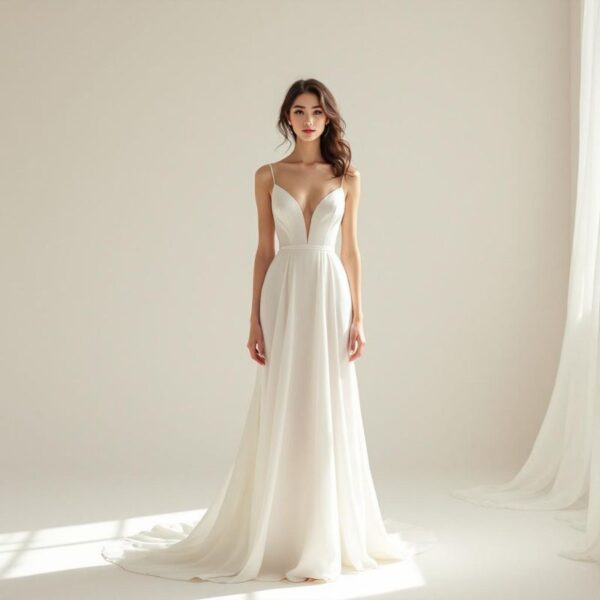
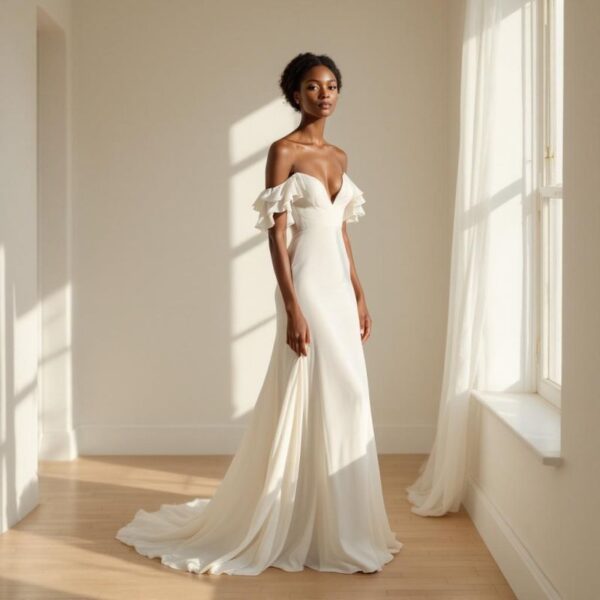
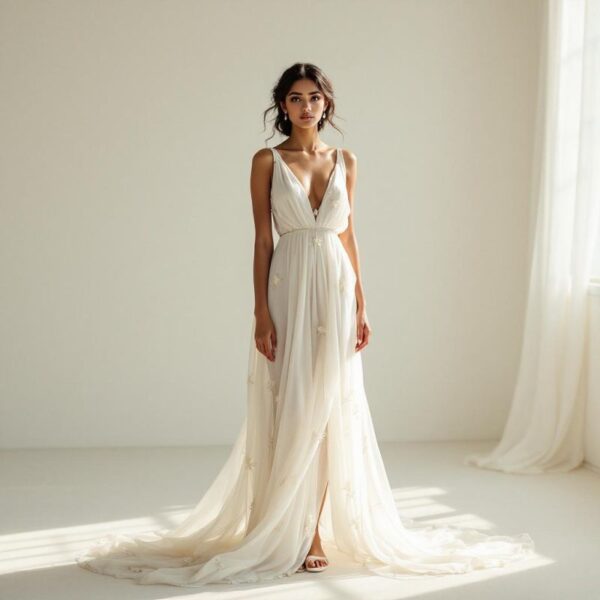
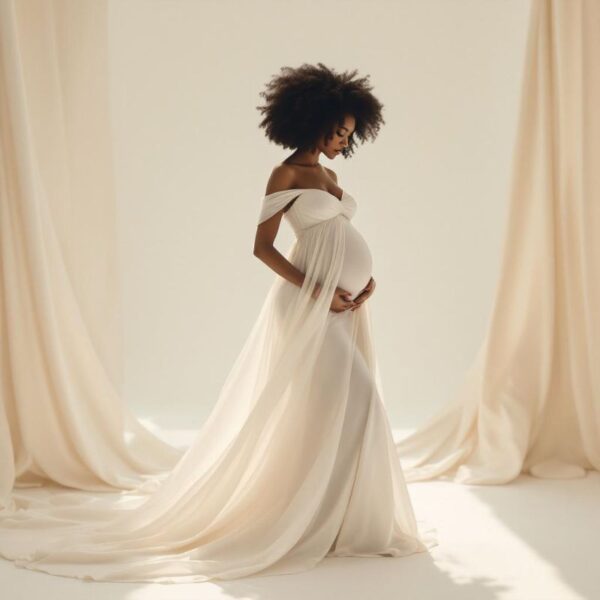
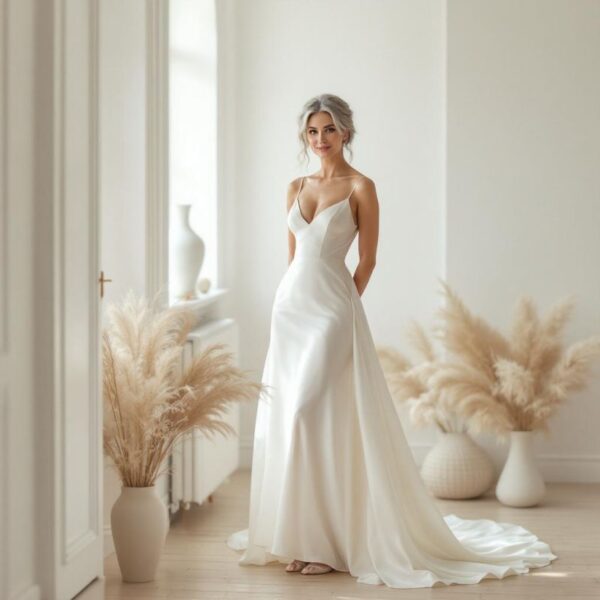
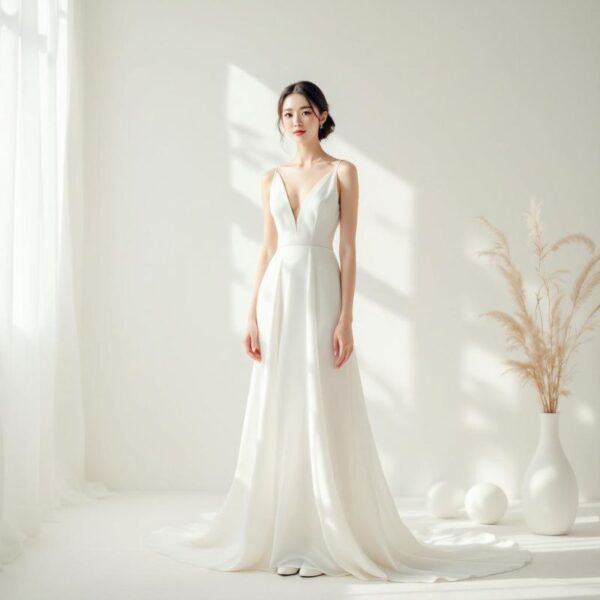
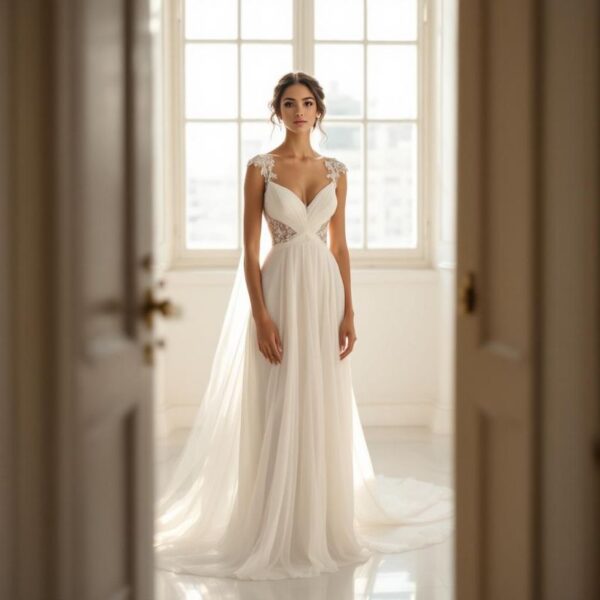
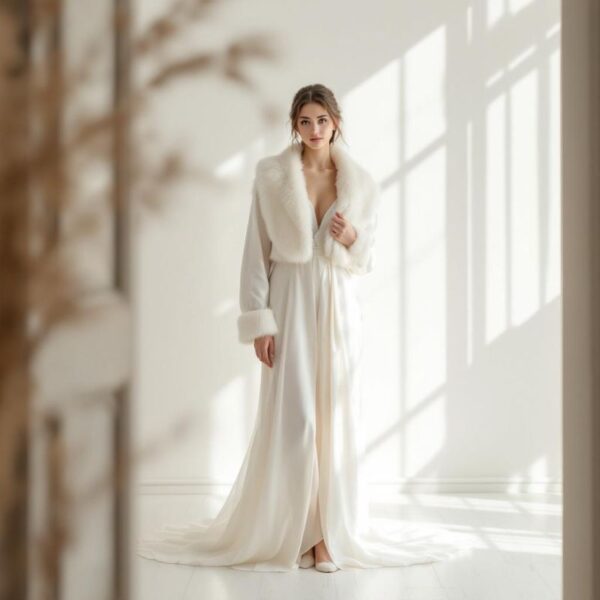
The right fabric makes or breaks a beach wedding dress. Chiffon is the classic choice: featherlight, it resists wrinkles, moves with the wind, and stays cool against the skin. Soft crepe offers a more structured alternative that still drapes beautifully without overheating. Lightweight tulle provides romance and movement. Avoid heavy satins, dense beading, and stiff structured fabrics, they trap heat, feel uncomfortable in humidity, and don't move naturally in the wind. The goal is a dress that looks as good caught in a gust as it does standing still.
Think about where you'll be walking. Sand is uneven and soft, which makes ball gowns with heavy underskirts impractical. A-line, sheath, and slip dress silhouettes are the most natural choices because they flow over the body without excess weight at the hem. If you want some fitted definition, a fit-and-flare works well as long as the skirt is in a light fabric. Shorter hemlines, midi, or high-low cuts eliminate the concern of dragging fabric through sand entirely. Whichever silhouette you choose, the lighter the fabric, the easier it will be to move.
Beyond the dress itself, think about accessories. Veils can be dramatic in a sea breeze but may also blow across your face during vows, so a shorter style or a secured headpiece may be more practical. Shoes are often barefoot, flat sandals, or wedges rather than heels that sink into sand. A train will pick up sand, so a trainless design or a very short sweep is more practical. If bright sunlight is expected, consider how the fabric photographs in strong light; softer, matte fabrics tend to photograph better than highly reflective satins.


Monday: 10am - 5pm
Tuesday: By Appointment
Wed & Thurs: 10am - 5pm
Friday: 12pm - 6pm
Saturday: 10am - 5pm
Sunday: Closed