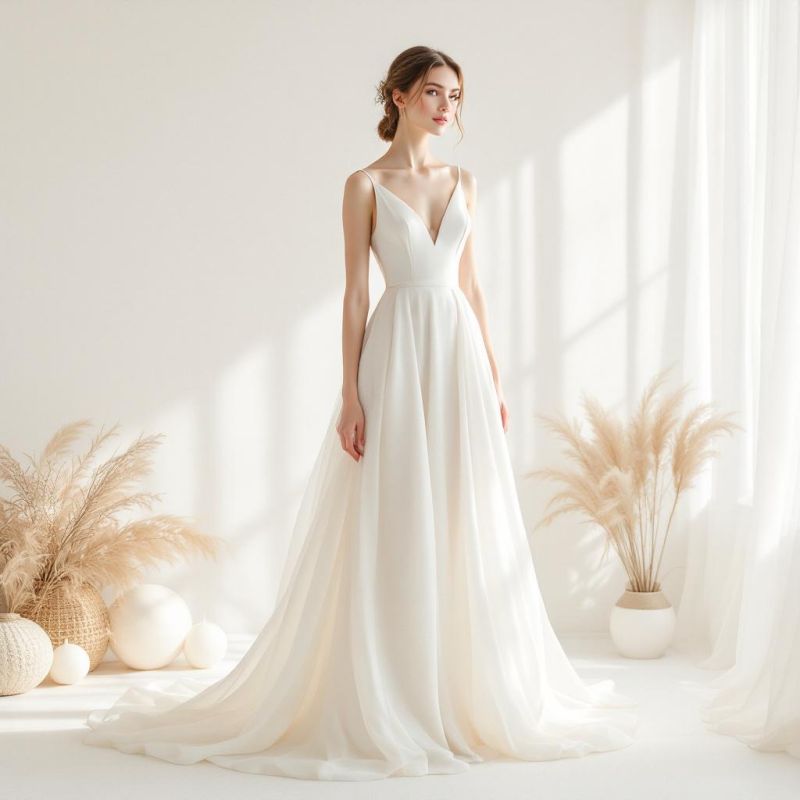
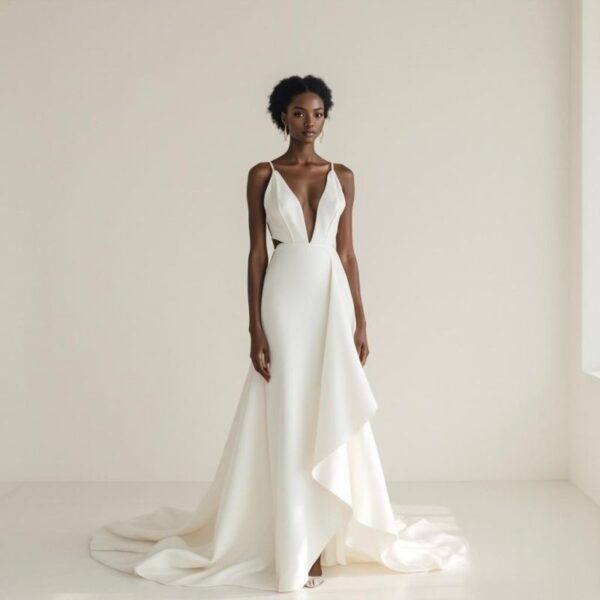
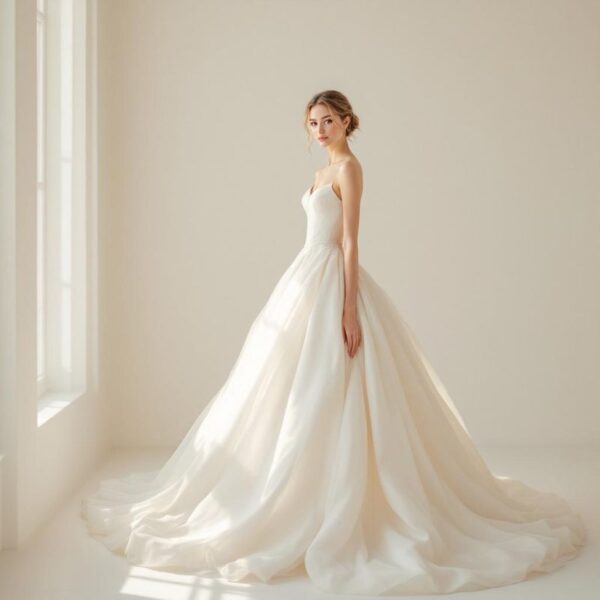
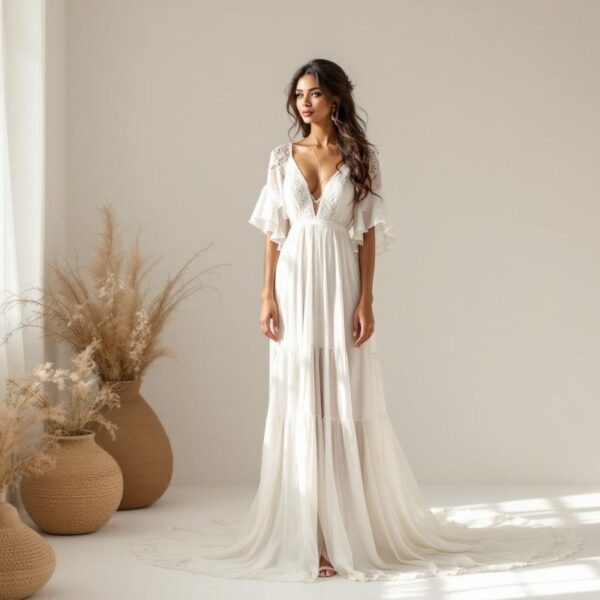
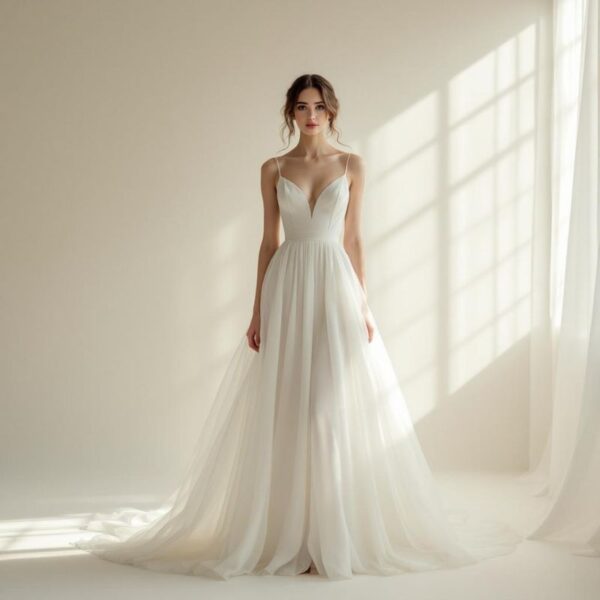
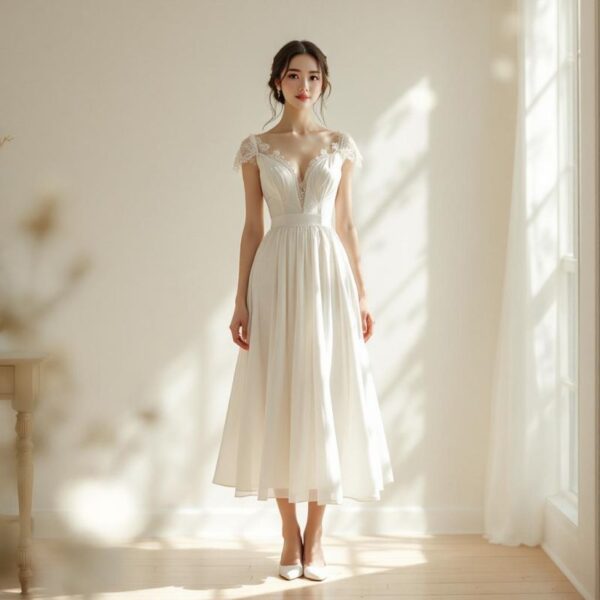
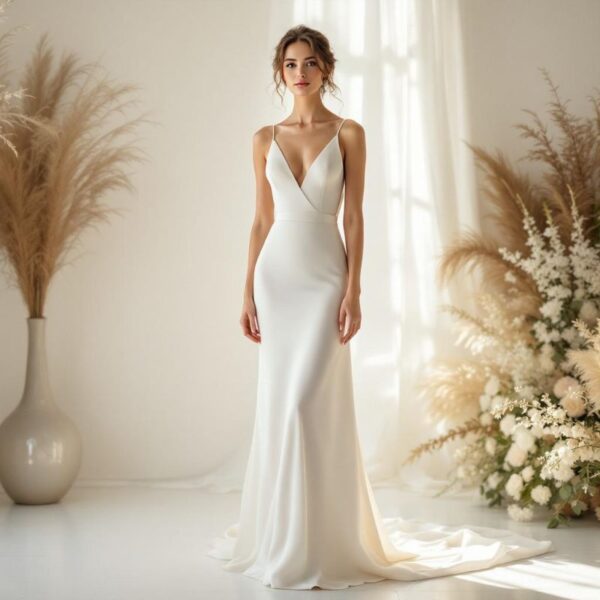
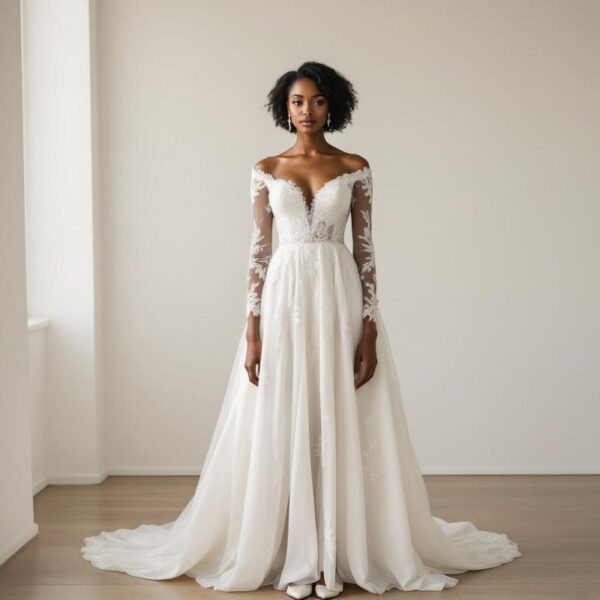
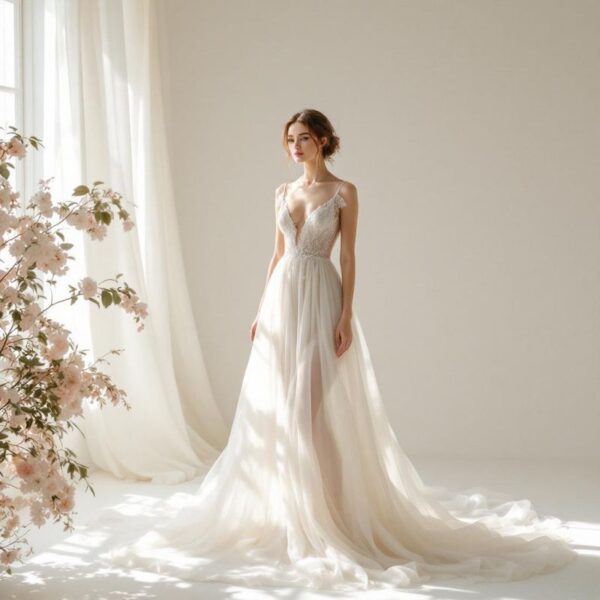
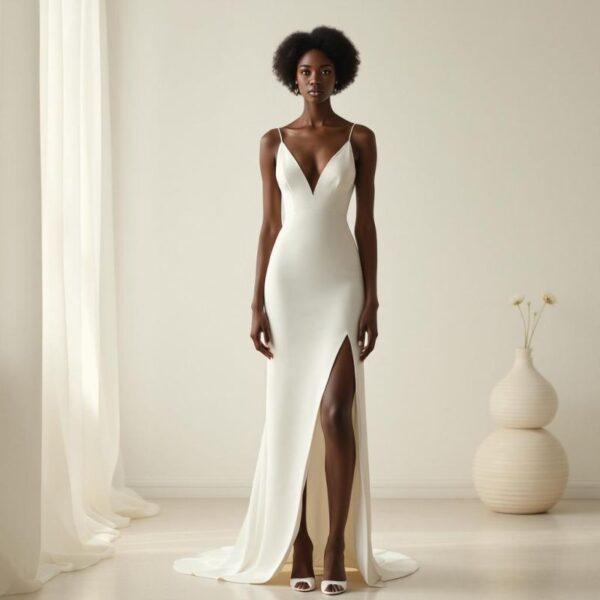
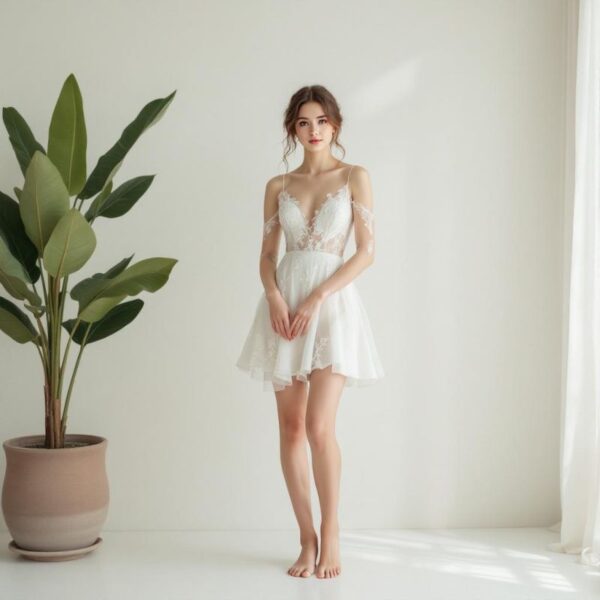
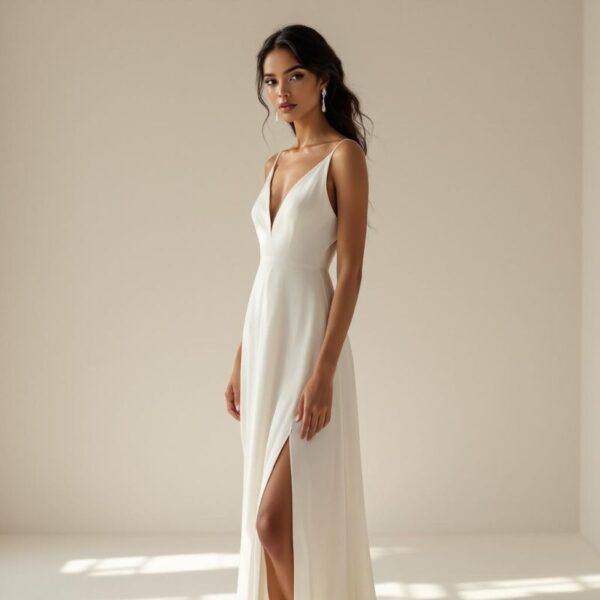
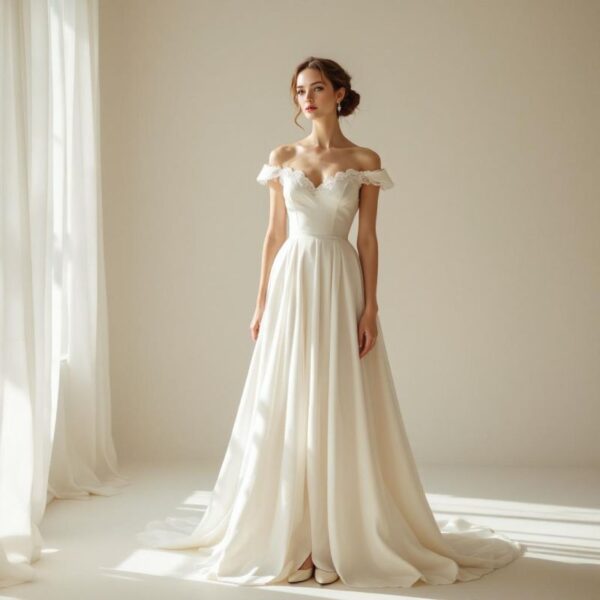
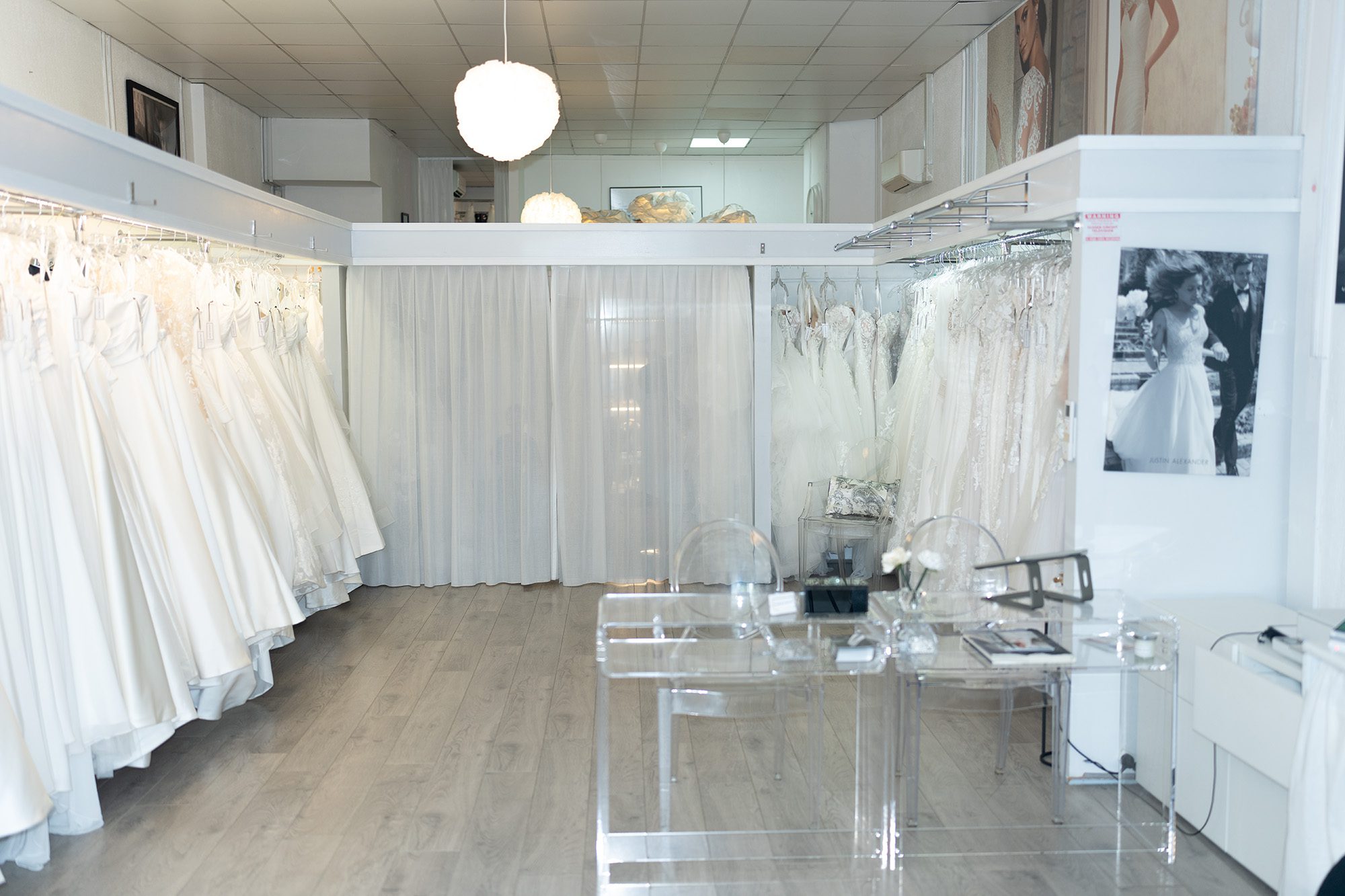
The A-line earns its reputation as the most flattering wedding dress shape because of how it balances proportions. The fitted bodice defines the waist at its narrowest point, while the skirt flares gradually over the hips and thighs without clinging. For pear-shaped figures, it creates visual balance. For straighter frames, it adds the suggestion of curves. Petite brides benefit from the elongating vertical line, and fuller figures find comfort in the way the skirt skims rather than clings. It's not a one-size-fits-all claim; it's simply good construction that works with anatomy rather than against it.
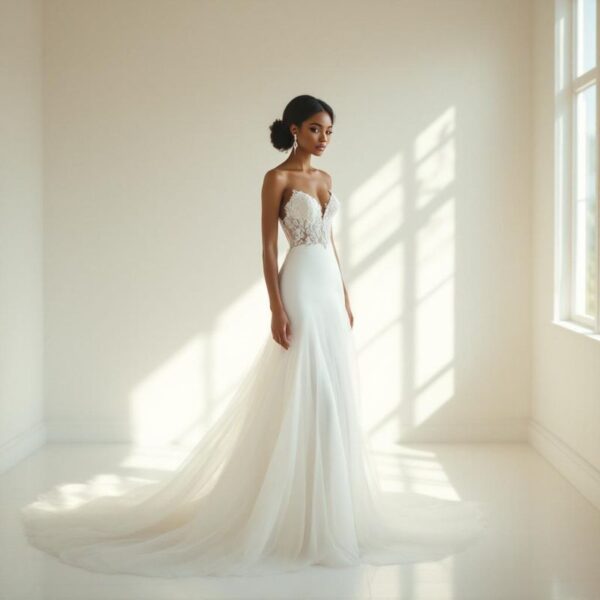
The fabric you choose transforms the entire character of an A-line gown. Crepe gives a sleek, modern finish with clean lines and minimal fuss, while tulle adds romance and volume without weight. Mikado creates a more structured, architectural shape that holds its own in a grand venue, and chiffon produces the lightest, most flowing movement, ideal for outdoor ceremonies. Lace layered over a base fabric can add texture and depth while preserving the silhouette's clean shape. When you try on A-lines in different fabrics during your appointment, you'll see how dramatically the same cut can change depending on the material.
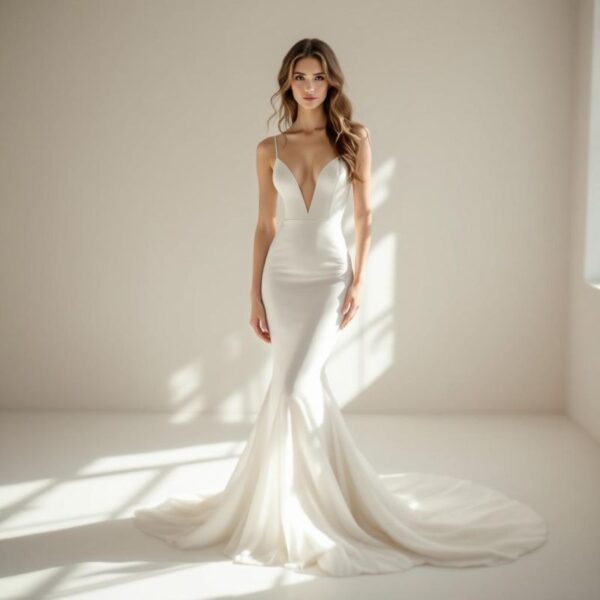
These three silhouettes are often confused, but the distinctions matter. An A-line flares gradually from the natural waist, creating a smooth, triangular shape. A ball gown shares the fitted bodice but has a dramatically fuller skirt, usually with a crinoline or multiple layers beneath. A fit-and-flare hugs the body through the hips before flaring out at mid-thigh, showing more of the figure. The A-line sits between the two: more shape than a ball gown's volume, more freedom than a fit-and-flare's structure. If you're unsure which suits you, trying all three during your appointment is the quickest way to feel the difference on your body.


Monday: 10am - 5pm
Tuesday: By Appointment
Wed & Thurs: 10am - 5pm
Friday: 12pm - 6pm
Saturday: 10am - 5pm
Sunday: Closed