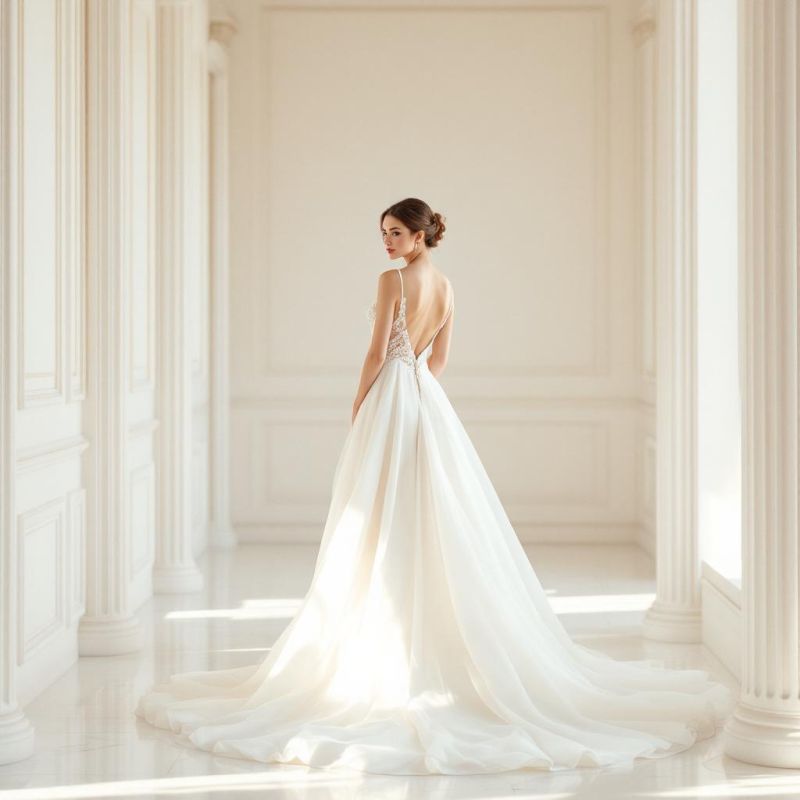
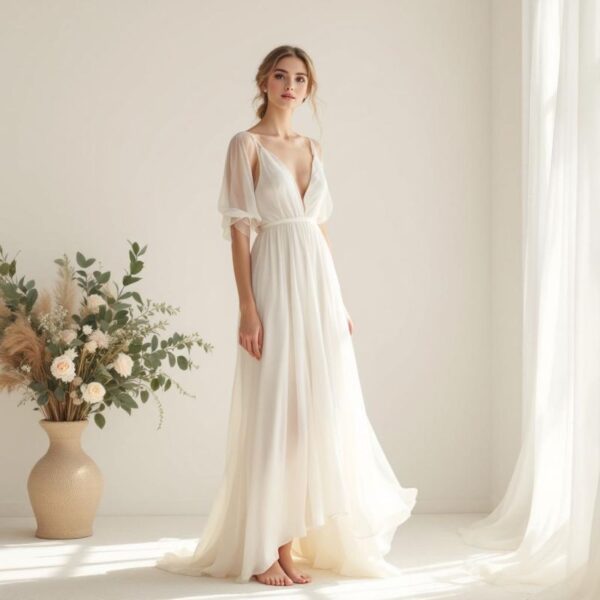
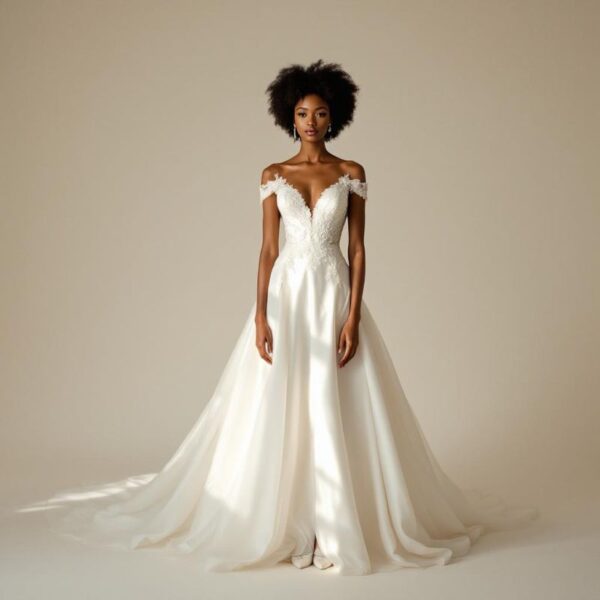
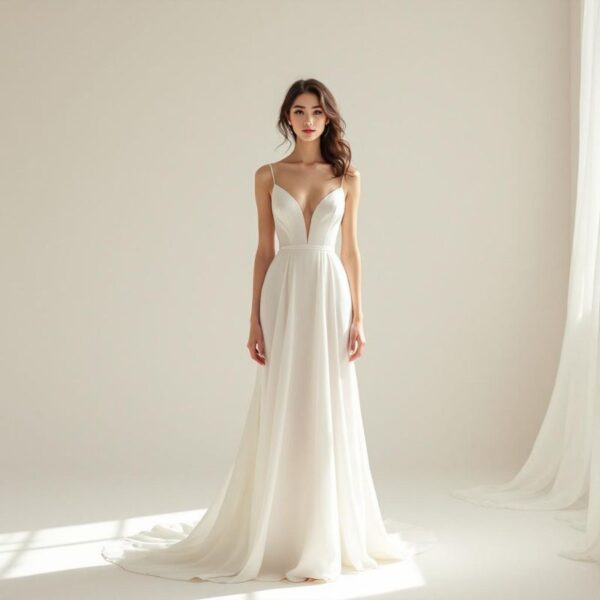
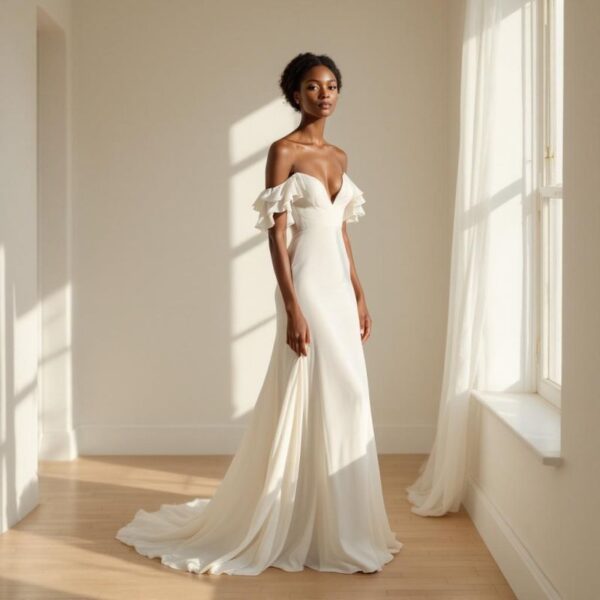
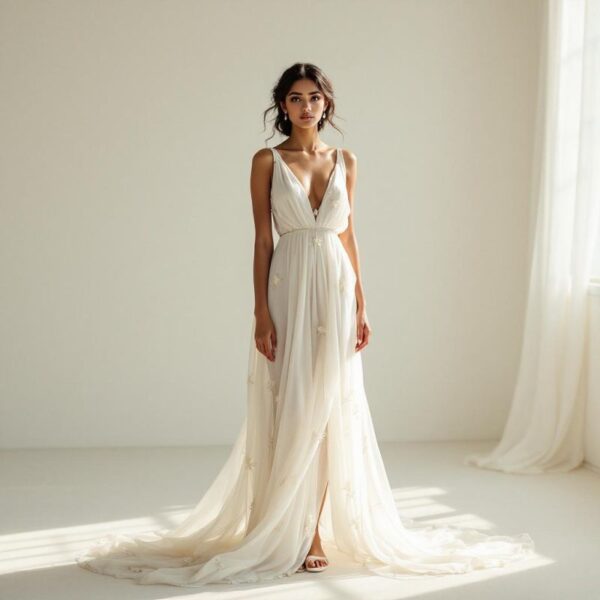
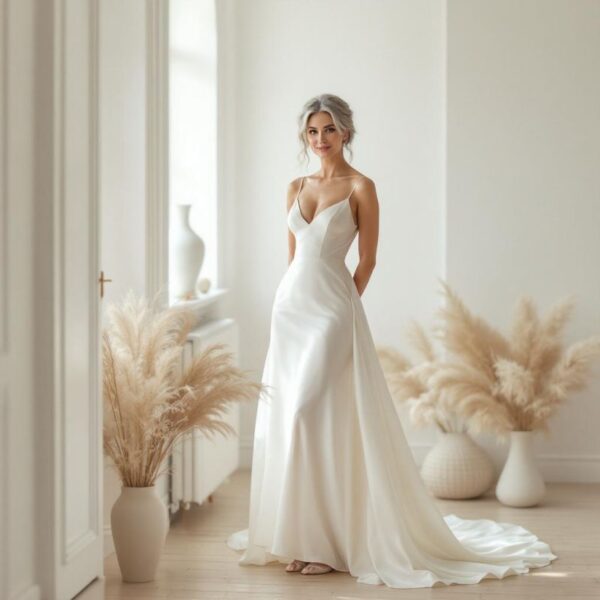
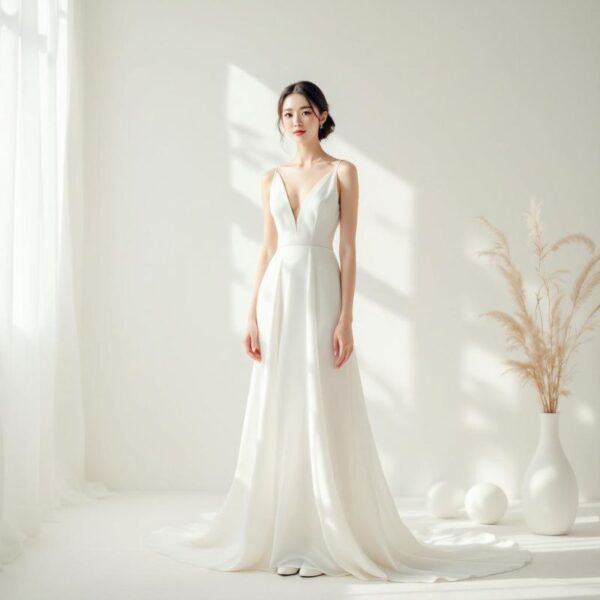
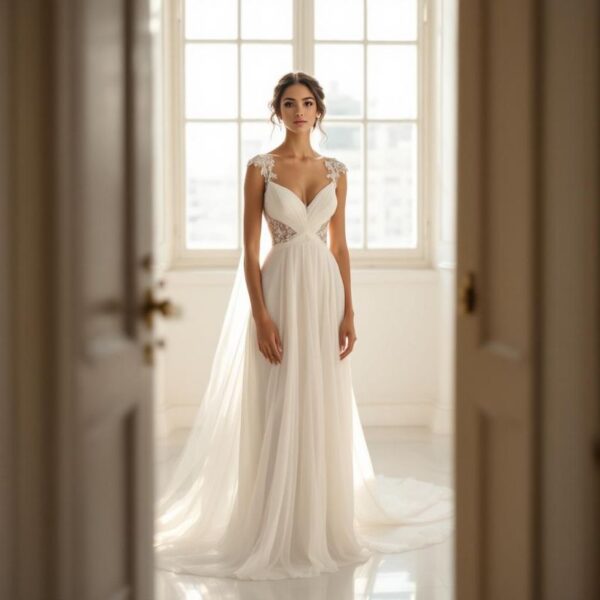
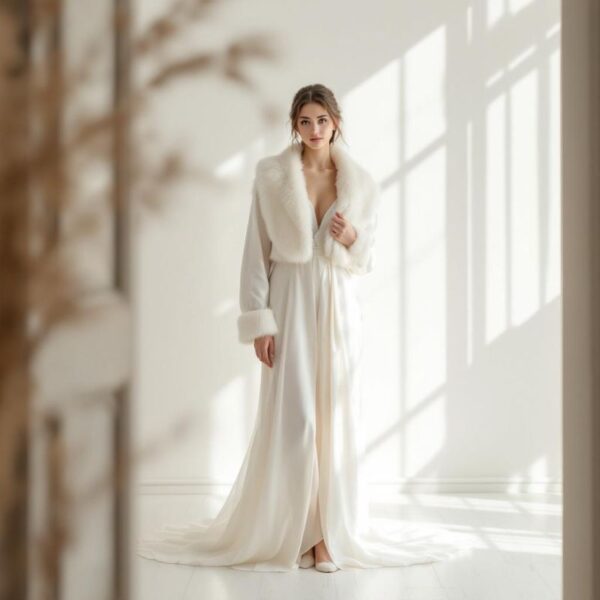
In a grand venue, the building itself is part of the visual story. A dress that would look perfect in a registry office can feel lost in a ballroom with thirty-foot ceilings. The key is choosing a gown with enough visual weight to hold its own: structured silhouettes like ball gowns and A-lines with trains, fabrics with presence like mikado, duchess satin, and embellished tulle, and detailing that reads well from a distance rather than only up close. Think about how you'll look walking across a large room, descending a staircase, or standing at the end of a long aisle.
Grand venues are where longer trains come into their own. A chapel or cathedral train that would feel excessive in a smaller space looks proportionate and magnificent trailing across a marble floor or down a stone staircase. The train creates movement and drama as you walk, and in photographs against period architecture, the effect is striking. Consider a detachable train if you want the drama for the ceremony and photographs but practicality for the reception. Your seamstress will add a bustle so the train can be gathered up for dancing.
Grand venues often have a mix of natural and artificial lighting: chandeliers, candlelight, large windows, and spotlights. How your dress interacts with light matters more in these settings than in smaller, evenly lit rooms. Satin catches and reflects light dramatically. Beading and sequins sparkle under chandeliers. Matte fabrics like crepe absorb light for a subtle, modern effect. Lace creates depth through shadow and texture. During your appointment, your stylist can show you how different fabrics behave under various lighting conditions, which helps you anticipate how the dress will look in your specific venue.


Monday: 10am - 5pm
Tuesday: By Appointment
Wed & Thurs: 10am - 5pm
Friday: 12pm - 6pm
Saturday: 10am - 5pm
Sunday: Closed