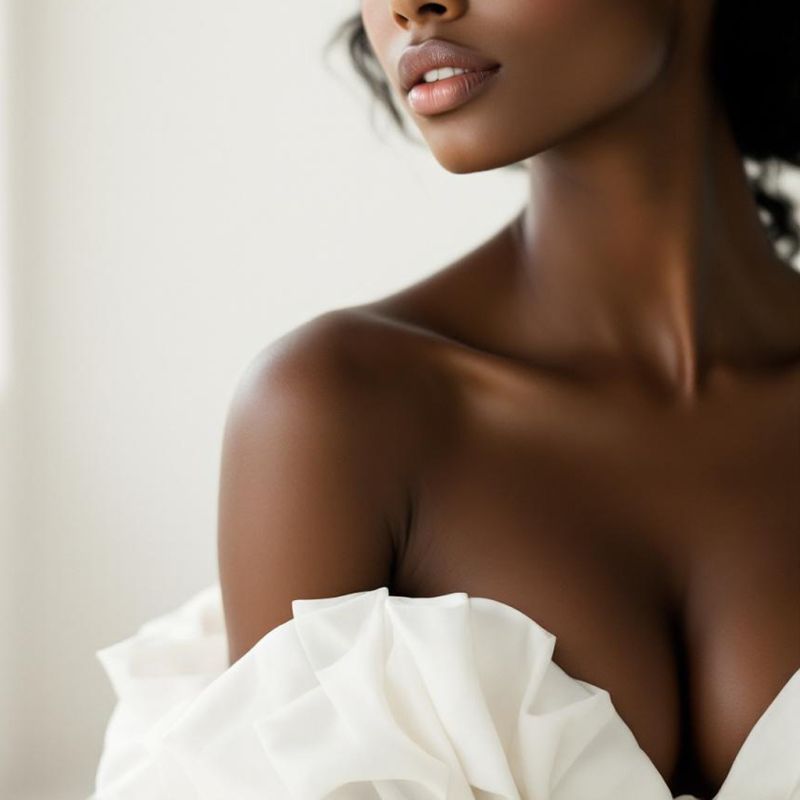
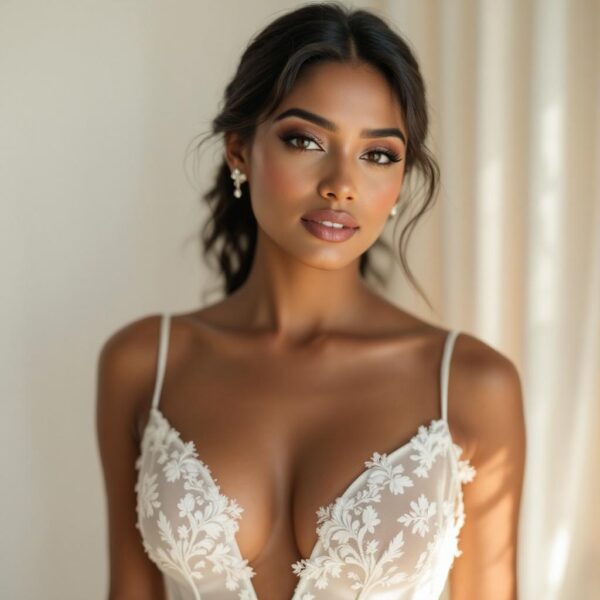
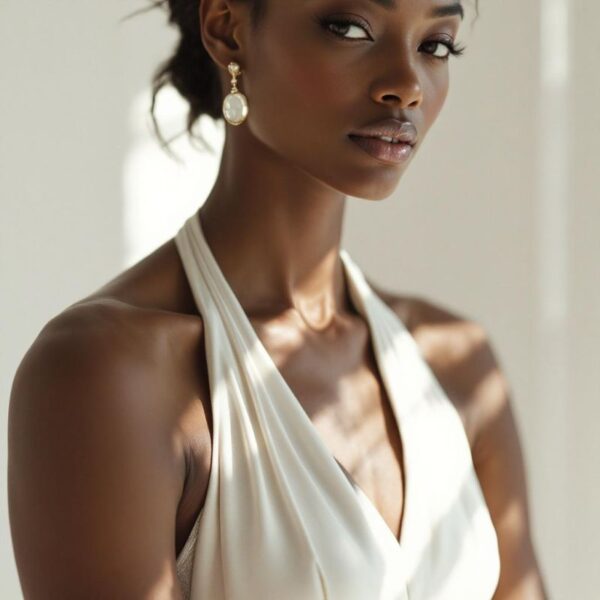
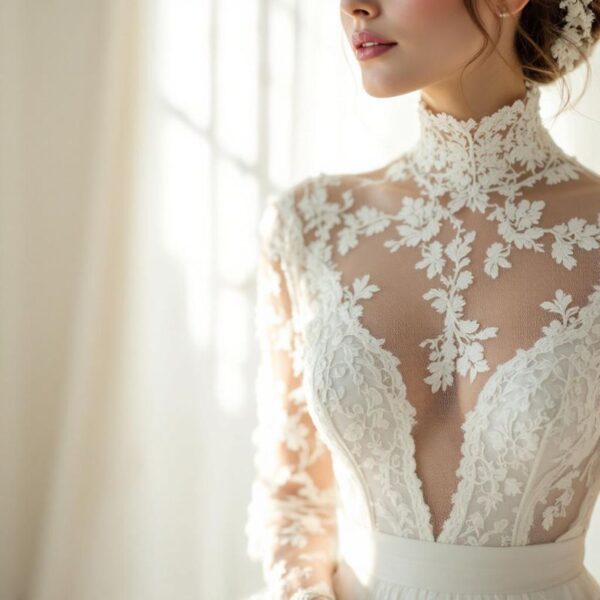
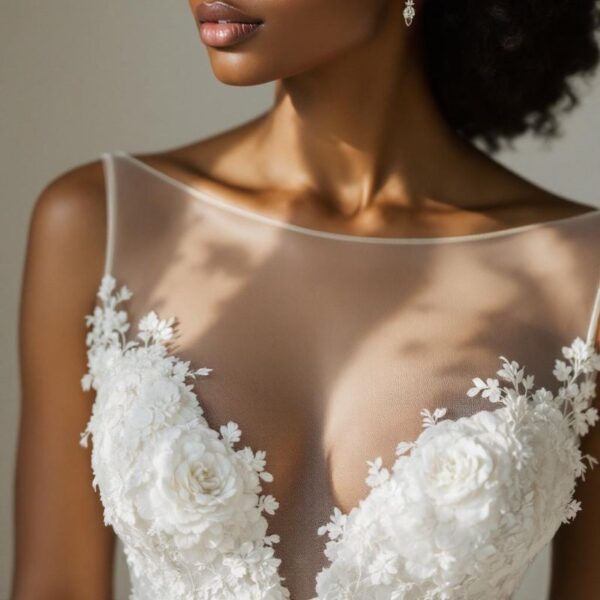
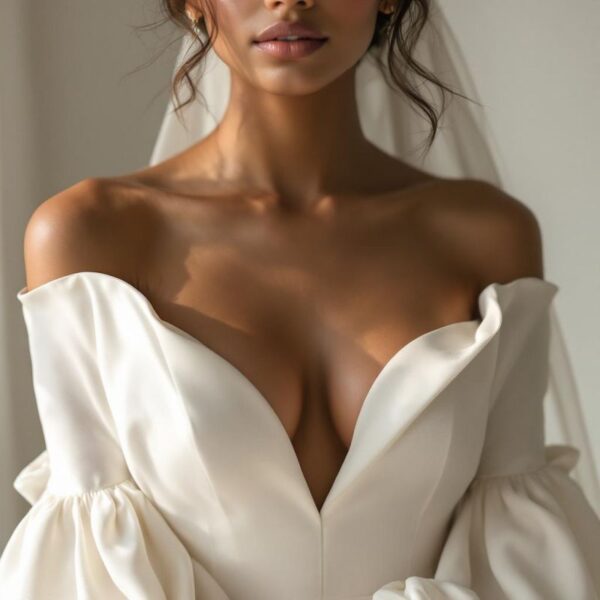
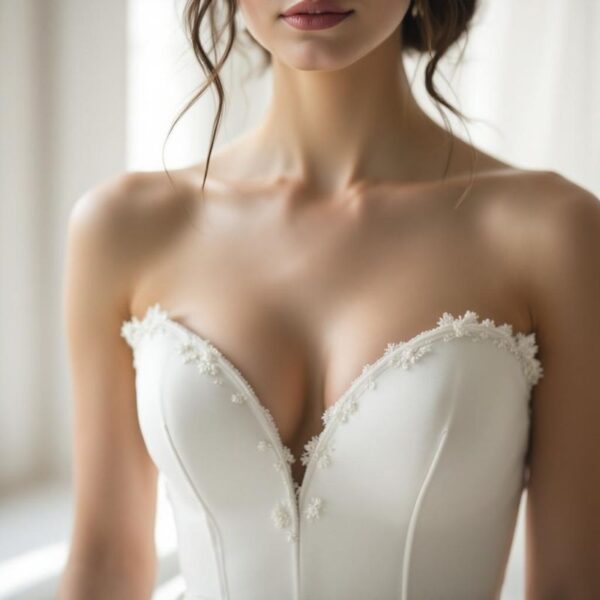
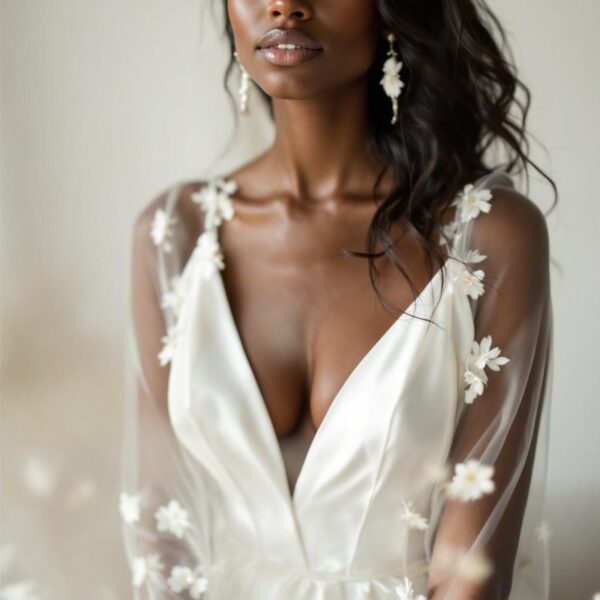
Strapless dresses have dominated bridal for decades because the clean top line creates maximum versatility. Any necklace works. Any veil works. Sleeves, toppers, and jackets can be added and removed to create different looks. The exposed shoulders and collarbone create a flattering frame for the face and work with almost any hairstyle. Without straps or sleeves, the bodice becomes a canvas for whatever detailing the designer chooses: lace, beading, ruching, or smooth satin. It's this adaptability that keeps strapless at the top of bridal wishlists.
A well-made strapless dress doesn't rely on gravity or luck. Internal boning, usually steel or plastic rods sewn into the bodice seams, provides structure from bust to waist. A snug fit around the ribcage anchors the dress in place. Silicone grips on the inside edge prevent sliding. Non-slip lining material adds further security. When properly altered, a strapless dress should feel secure enough to dance, raise your arms, and move freely without once worrying about the bodice shifting. If it doesn't feel this way, it needs more alterations, not a different dress.
One of the smartest approaches to bridal dressing is choosing a strapless foundation and building from there. A strapless bodice can be paired with detachable sleeves for the ceremony, a lace topper for the church, and a cape or jacket for outdoor photographs, then stripped back to its clean strapless form for the reception. This one-dress-multiple-looks approach is practical and cost-effective, and it means you can adapt your outfit to different parts of the day without changing the entire dress.


Monday: 10am - 5pm
Tuesday: By Appointment
Wed & Thurs: 10am - 5pm
Friday: 12pm - 6pm
Saturday: 10am - 5pm
Sunday: Closed