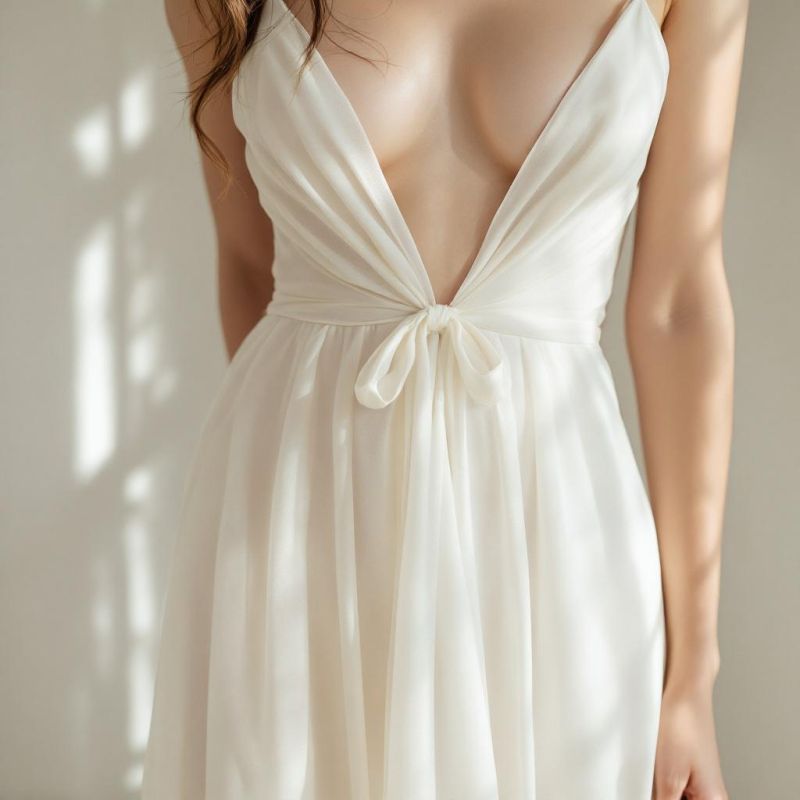
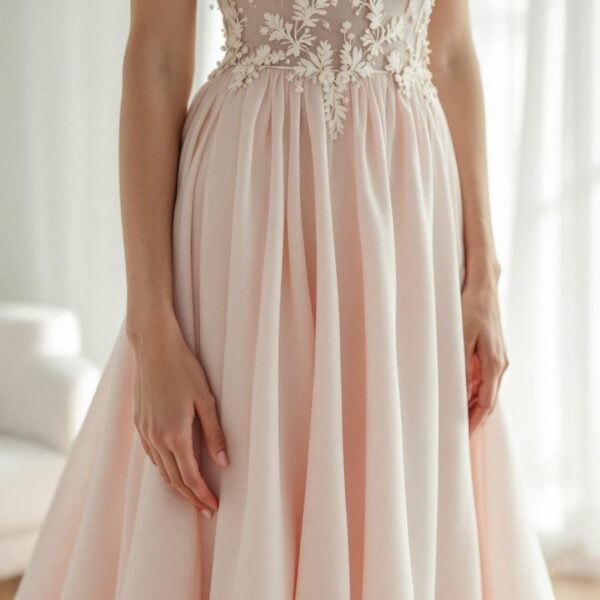
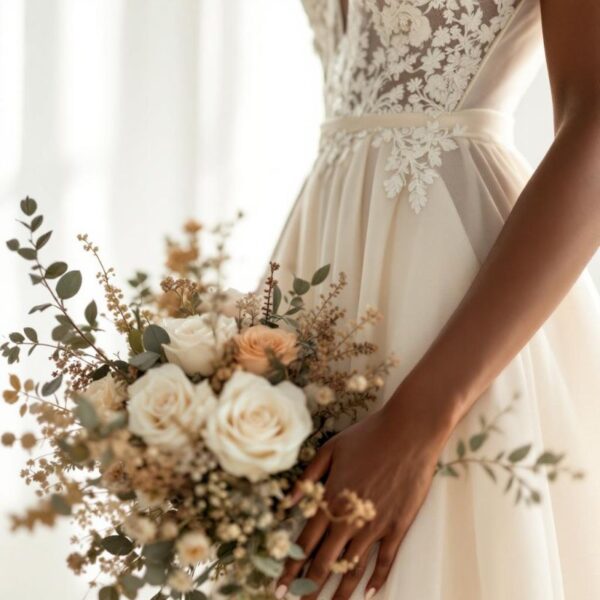
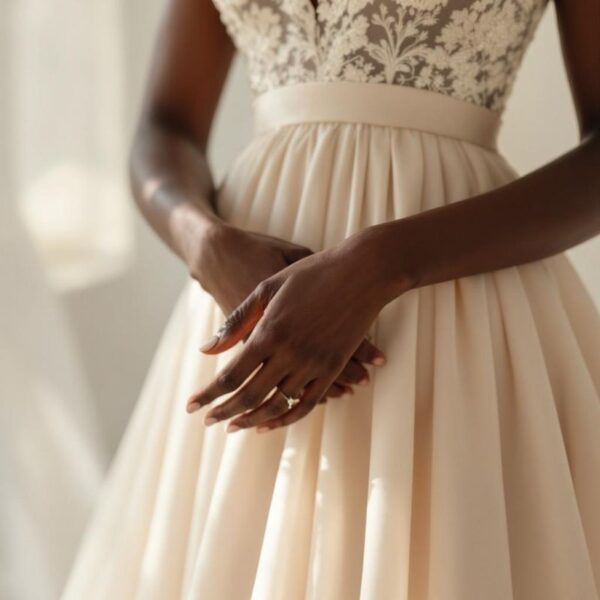
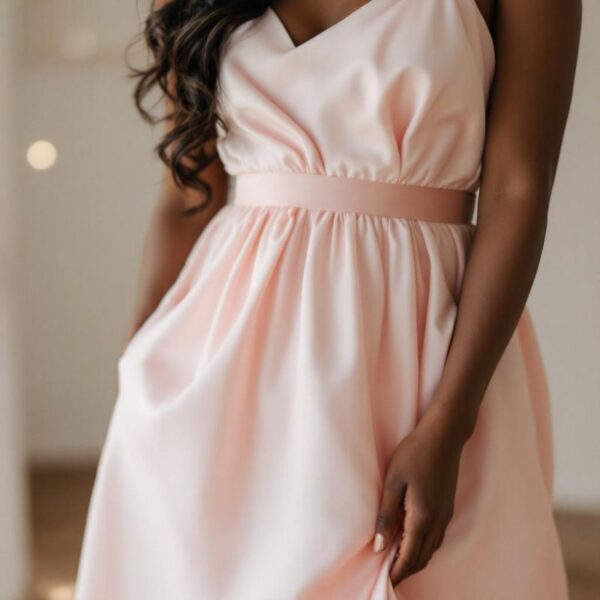
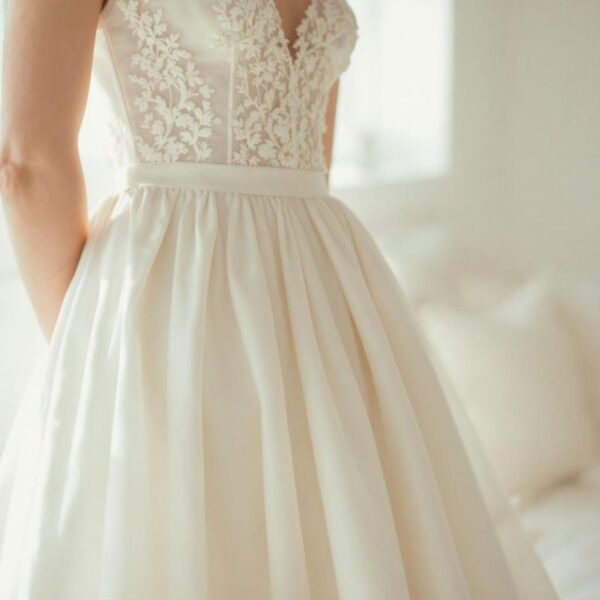
The difference between ivory and white is subtle on a hanger but significant on the body. White is a pure, cool shade with no warmth. Ivory has a yellow or cream undertone that softens the colour and creates warmth against the skin. Most people's skin has warm undertones, which means ivory complements rather than contrasts, creating a harmonious, natural look. White can wash out fair skin and create a stark contrast against darker skin. Ivory works with both, which is why it has become the default bridal shade across the industry.
The same ivory shade looks different across fabrics. Ivory satin has a warm, golden lustre. Ivory crepe appears matte and clean. Ivory lace shows the colour most in the denser areas of the pattern, with lighter areas appearing more neutral. Ivory tulle, when layered, deepens in warmth with each additional layer. This means the fabric choice affects how warm or cool the ivory reads on the dress. During your appointment, your stylist may show you the same colour in different fabrics to help you see how the shade shifts with the material.
Ivory photographs with a soft, warm quality that looks natural and flattering in both daylight and artificial light. In photographs, ivory reads as "wedding dress white" without the potential harshness of true white, which can blow out in bright light or under flash. The warm undertone also means ivory picks up golden hour light beautifully, creating a glowing effect in late-afternoon photographs. Most photographers prefer working with ivory tones because the results are consistently flattering.


Monday: 10am - 5pm
Tuesday: By Appointment
Wed & Thurs: 10am - 5pm
Friday: 12pm - 6pm
Saturday: 10am - 5pm
Sunday: Closed