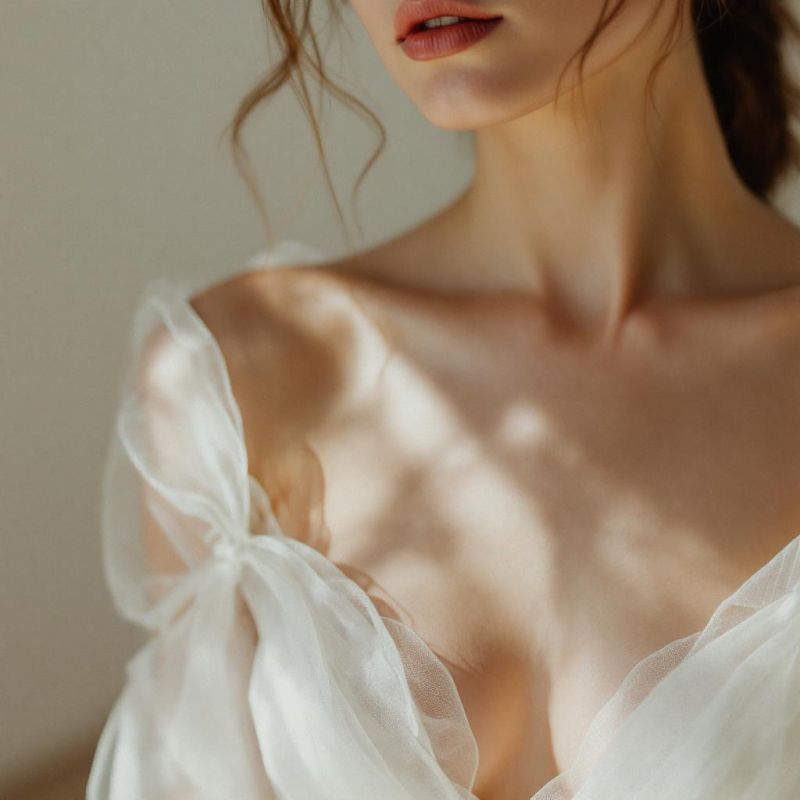
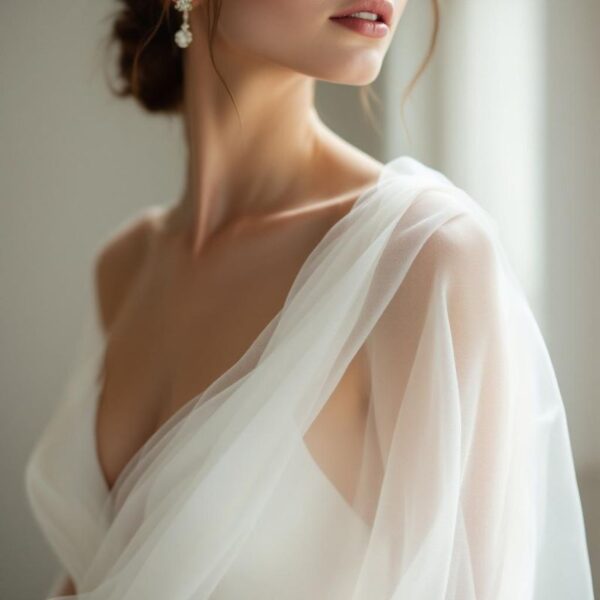
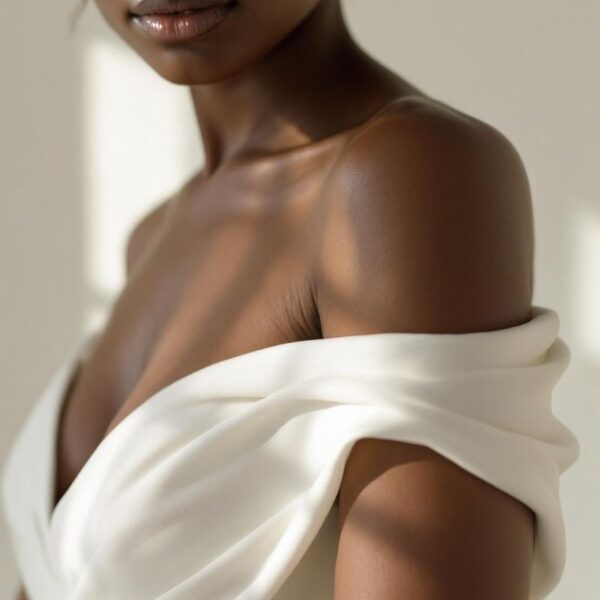
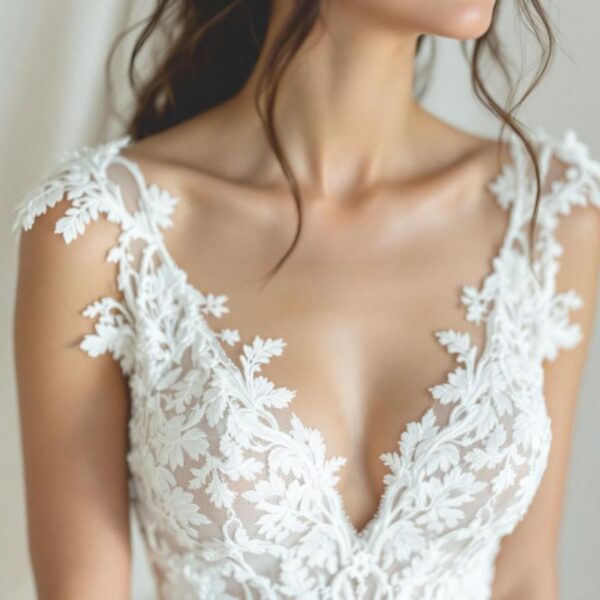
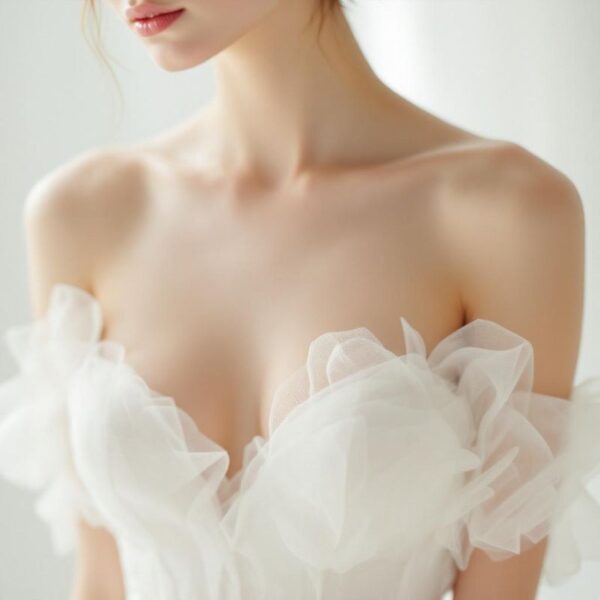
Organza is a woven fabric with a crisp hand and a subtle shimmer. Unlike tulle, which is a net, organza has a smooth, woven surface that catches light with a gentle luminosity. Unlike chiffon, which drapes fluidly, organza holds its shape and can be folded, pleated, and sculpted into architectural forms. This makes it uniquely suited to structured bridal design: ball gown skirts that hold their shape without petticoats, dramatic bows, origami-like pleats, and layered details that maintain their form throughout the day.
Layered organza builds volume with a polished, almost glass-like quality that differs from tulle's cloud-like softness. A single organza overlay on a fitted dress adds structure and sheen without volume. Multiple layers create a full skirt with a crisp, almost architectural quality. Organza overskirts are popular as detachable accessories: a fitted sheath or A-line beneath with a full organza overskirt for the ceremony creates two looks from one dress. The slight sheen of the fabric means organza skirts catch light and movement beautifully in photographs.
Organza is prone to creasing more than tulle or chiffon because of its crisp weave. Careful steaming before the wedding is usually necessary. The fabric can also be prone to snagging on rough surfaces. However, its structured nature means it holds its shape well throughout the day, maintaining the silhouette from ceremony to last dance. Silk organza is the most luxurious variety, with a softer hand and more natural sheen. Polyester organza is more affordable and wrinkle-resistant. Both work well in bridal applications.


Monday: 10am - 5pm
Tuesday: By Appointment
Wed & Thurs: 10am - 5pm
Friday: 12pm - 6pm
Saturday: 10am - 5pm
Sunday: Closed