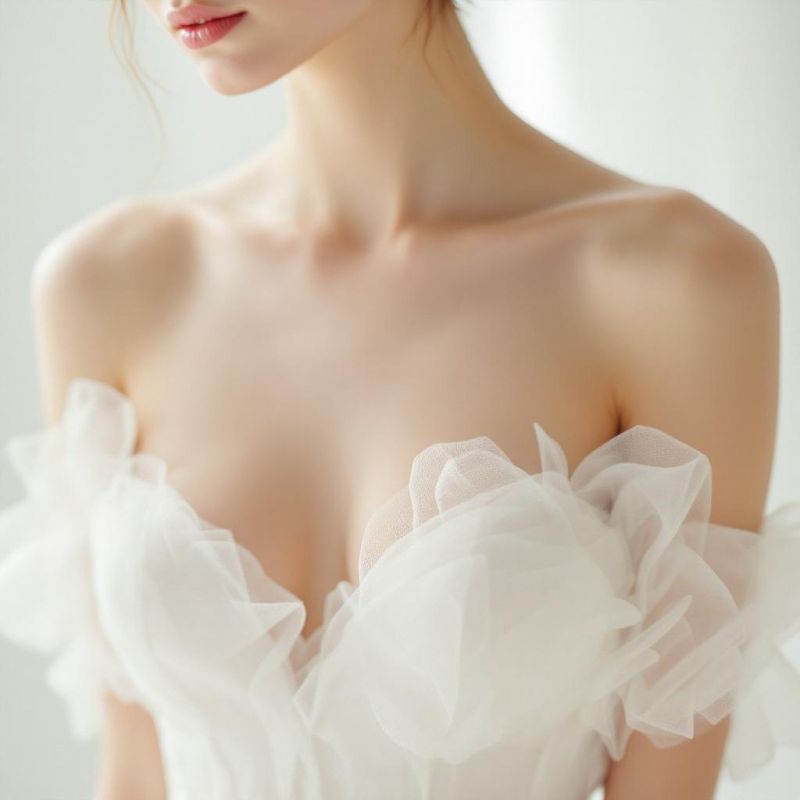
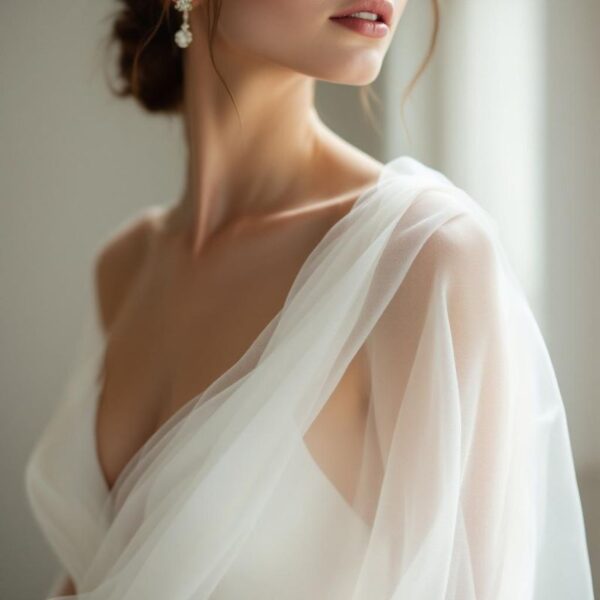
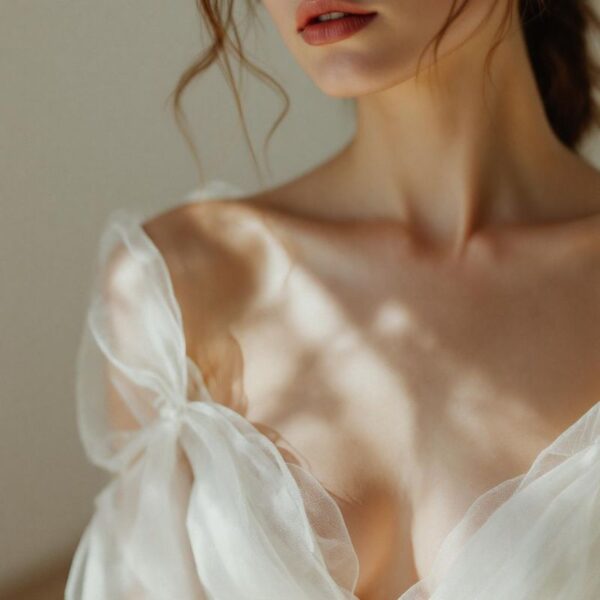
Tulle's magic is its ability to build volume through layers. Each layer is almost weightless on its own, but stacked together they create fullness that looks dramatic without feeling heavy. A ball gown skirt might use six or more layers of tulle to achieve its shape, yet feel lighter than a single layer of satin. This makes tulle the fabric of choice for full skirts, especially for brides who want a princess silhouette without carrying excessive weight throughout the day. The air trapped between layers also provides natural temperature regulation.
Bridal tulle varies significantly in quality. English net tulle is soft, drapey, and has a gentle, matte finish. French tulle is finer and more delicate. Italian tulle tends to be slightly stiffer, better for holding structured shapes. Silk tulle is the most luxurious, with a soft hand and beautiful drape, but comes at a premium price. Glitter tulle has tiny sparkle woven through for a shimmering effect. The quality of tulle affects how it drapes, how it holds its shape, and how comfortable it feels against the skin.
Tulle is more durable than it looks but benefits from careful handling. It can snag on sharp edges, jewellery, or rough surfaces, so awareness during the day helps. Tulle wrinkles can usually be released with a gentle steamer. The fabric doesn't absorb stains as readily as satin, which is a practical advantage. After the wedding, professional cleaning and storage in acid-free tissue will keep tulle in good condition for preservation. Minor snags can often be repaired invisibly by a skilled seamstress.


Monday: 10am - 5pm
Tuesday: By Appointment
Wed & Thurs: 10am - 5pm
Friday: 12pm - 6pm
Saturday: 10am - 5pm
Sunday: Closed